
There’s nothing worse than coming home on a sweltering Annapolis day only to find your air conditioner has completely stopped working. Whether it’s the middle of the night, the hottest afternoon of the summer, or just before you’re expecting guests, an unexpected air conditioning breakdown can quickly turn into a major headache. The Maryland heat doesn’t wait, and neither should you.
At Grove Heating & Cooling, we provide fast, reliable emergency AC repair in Annapolis, MD, to get your cooling system up and running when you need it most. Our team understands the urgency of a sudden AC failure, which is why we offer rapid response times, expert diagnostics, and long-lasting solutions, whether you’re located near the United States Naval Academy or Truxton Park.
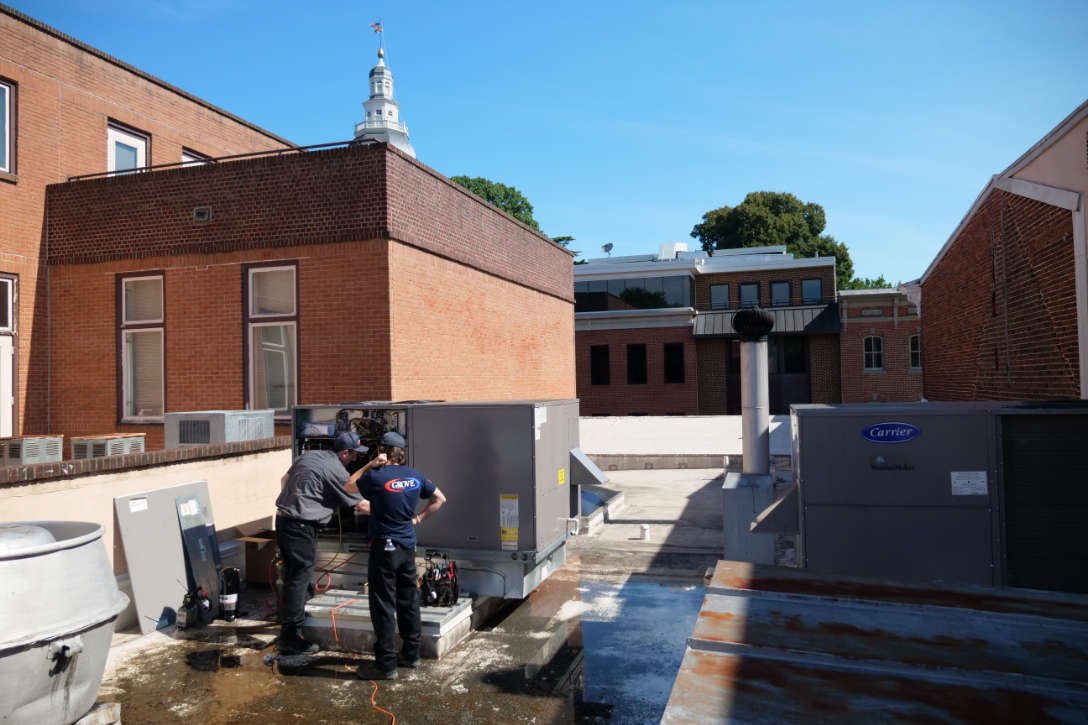
Cooling problems don’t follow a schedule, and neither do we. Whether it’s the middle of a hot summer afternoon or a late-night breakdown, our team is ready to restore your comfort with fast, reliable emergency AC repairs in Annapolis, MD—whenever you need us.
When your air conditioning system breaks down in the middle of a humid summer, you need a company you can depend on. Grove Heating & Cooling has built its reputation on honesty, reliability, and unmatched service. From homes near Annapolis High School to historic properties around St. Anne’s Church, families throughout Anne Arundel County know they can count on us to restore comfort quickly and with care.
Here’s why our customers choose us for emergency AC repair:
When you choose Grove Heating & Cooling for emergency air conditioning services, you get fast solutions backed by a company that stands behind its work and puts your comfort first.
When your air conditioner isn’t working properly, it can be difficult to tell whether you need immediate emergency AC service or if it’s something that can wait for a scheduled repair. Some AC issues are urgent and can lead to serious damage, while others, though inconvenient, won’t cause further harm if addressed during a regular appointment.
If you notice any of the following signs, don’t wait—call Grove Heating & Cooling right away for 24/7 emergency air conditioning repair in Annapolis, MD:
On a scorching Annapolis summer day, non-working air conditioning units can be dangerous. When indoor temperatures rise quickly, children, older adults, and pets are especially vulnerable to heat-related illnesses. Our emergency HVAC repair technicians are ready to respond quickly and restore safe, cool air to your home.
Strange odors like burning plastic, smoke, or a hot electrical smell signal a serious issue. This often points to overheating parts or faulty wiring, which can create a fire hazard if ignored. If this happens, switch off your air conditioning system immediately and call us for emergency repair services.
Air conditioners make some sound during normal operation, but loud screeching, banging, or grinding is a red flag. These noises often mean a motor, fan, or another critical part is failing. Running the system while these sounds persist can cause major damage, leading to costly repairs or even a total air conditioning replacement due to a broken HVAC system.
Refrigerant leaks are serious and should never be ignored. Warning signs include hissing or bubbling sounds, ice building up on your coils, or warm air blowing from vents even though the system is running. Low refrigerant levels can damage the compressor and may even create unsafe conditions inside your home.
If your air conditioner refuses to start, it could be more than just an inconvenient glitch. A non-responsive thermostat or complete system shutdown may indicate an electrical failure that requires immediate attention. Our team can quickly diagnose the problem, whether it’s wiring, circuit breakers, or another issue, and get your system running again.
Some AC problems, while frustrating, aren’t emergencies and can be scheduled for the next convenient air conditioning repair time:
If you’re unsure whether your air conditioning issue is an emergency, it’s always better to be safe. Grove Heating & Cooling is here to help—our team will assess your situation and let you know if you need immediate service or if a scheduled repair is a better option. Call us 24/7 for expert AC repair in Annapolis, MD!
The first signs of trouble can be subtle—warm air blowing from your vents, unusual noises, or an AC unit that won’t turn on at all. Before you know it, the temperature inside your home starts climbing, and frustration sets in. You need a fix fast, but who can you trust to show up quickly and get the job done right?
Sometimes an air conditioner reaches the point where repair just isn’t possible or it’s simply not practical to keep putting money into an aging, inefficient system. If that’s the case, Grove Heating & Cooling will walk you through your air conditioning installation options.
We’ll never pressure you into a quick decision; instead, we’ll explain the costs and benefits clearly so you can choose what’s best for your home. We also offer special financing options with approved credit, because we know sometimes air conditioning replacement can come as a surprise. If you decide a new unit is the right move, our HVAC experts can install a new, highly-efficient system that delivers reliable comfort for years to come.
Most air conditioning breakdowns build up slowly as parts wear down, dirt and pet dander collect, and small issues go unnoticed. AC systems require routine maintenance, and it’s one of the smartest investments you can make for your comfort. By scheduling seasonal air conditioning maintenance with Grove Heating & Cooling, you’ll reduce the chances of being caught off guard by a sudden AC failure on a sweltering Annapolis afternoon.
During a regular maintenance visit, our technicians carefully inspect, clean, and test every major component of your system. We’ll catch worn belts before they snap, spot refrigerant leaks before they grow worse, and make sure your thermostat is calibrated properly.
This proactive approach not only lowers the risk of emergency repairs, but it also improves your AC system’s efficiency, saving you money on energy bills throughout the cooling season. Whether you’re heading out for dinner at Middleton Tavern or cheering on the Panthers at Annapolis High School, you’ll know your home will be cool and comfortable when you return.
For even greater peace of mind, consider joining our Maintenance Membership program. Members enjoy priority service, regular tune ups for your air conditioner and heating system, and exclusive savings on heating and air conditioning repairs. Keep your cooling system running strong in the summer, your furnace working properly in the winter, and your house comfortable all year long!
When your air conditioner fails, don’t sweat it—call the trusted professionals at Grove Heating & Cooling. We’re here to restore your comfort with fast, reliable, and expert emergency AC service in Annapolis, MD.
Need help now? Call us today for immediate assistance! help now? Call us today for immediate assistance!
Your air conditioner is one of the hardest-working systems in your home, especially during the hot, humid summers in Columbia, MD. While you rely on it to keep your home comfortable, many homeowners don’t realize that their AC can develop problems that impact its performance and efficiency. Understanding the most common air conditioning issues can help you spot warning signs early and know when to call Grove Heating & Cooling for professional AC repairs.
One of the most frequent AC problems we see is a refrigerant leak, which can significantly reduce your system’s ability to cool your home. However, other issues—such as clogged filters, frozen coils, electrical failures, and thermostat malfunctions—can also cause your air conditioner to struggle or stop working altogether. Ignoring these issues can lead to higher energy bills, poor cooling performance, and costly breakdowns.
In this guide, we’ll walk you through the most common air conditioning faults, how to recognize them, and what you can do to prevent expensive repairs. If you notice any of these problems, don’t wait—contact Grove Heating & Cooling for fast, reliable air conditioning repair in Columbia, MD!

Refrigerant is the substance that allows your air conditioning unit to absorb heat from inside your home and release it outdoors. When everything is working properly, refrigerant levels should remain stable throughout your AC’s lifespan. However, if your system develops a refrigerant leak, it can’t effectively remove heat. This reduces cooling performance, raises energy bills, and can even cause a full system failure.
Many homeowners assume that refrigerant simply runs out over time, but this isn’t the case. If your system is low on refrigerant, there’s a leak somewhere that needs to be repaired. Ignoring a refrigerant leak forces your AC to work harder, increasing wear and tear on essential components like the compressor. Left unaddressed, it can lead to expensive repairs or even premature AC replacement.
Refrigerant leaks can develop for several reasons, with corrosion in the refrigerant lines being one of the most common. Over time, exposure to moisture and formic acid can cause pinhole leaks to form in the copper tubing, allowing refrigerant to slowly escape. Poor installation or factory defects can also be to blame—if the system wasn’t properly installed or had a weak joint from the start, leaks can form at connection points.
Physical damage is another frequent cause, as vibrations from regular operation, shifting components, or accidental impact can crack refrigerant lines. Lastly, normal wear and tear can degrade fittings and connections over the years, making slow leaks inevitable in aging systems.
To reduce the likelihood of a refrigerant leak causing major problems, be sure to schedule air conditioning maintenance once per year. A professional technician will check refrigerant levels and inspect for leaks before they worsen. Throughout the year, keep your outdoor unit clear of debris and avoid accidental damage from landscaping tools.
If you suspect a refrigerant leak, don’t wait—low refrigerant levels can damage your system and lead to costly repairs. Contact Grove Heating & Cooling for expert AC repair in Columbia, MD, and get your system back to peak performance!
While refrigerant leaks are a major cause of AC problems, other things can go wrong with your cooling system. If your air conditioner isn’t keeping your home cool, one of these common problems might be the culprit.
Catching these issues early can help you avoid costly repairs and keep your air conditioner running efficiently. If you notice poor cooling, unusual noises, or rising energy bills, call Grove Heating & Cooling for fast air conditioning repair in Columbia, MD!
If your air conditioner is struggling, don’t wait for a complete breakdown; call Grove Heating & Cooling! Whether it’s a refrigerant leak, electrical issue, or other problem, the expert technicians at Grove Heating & Cooling can diagnose and repair your system quickly. We provide reliable air conditioning repair services throughout Columbia, MD, that make sure your home remains cool and comfortable.
Call us today to schedule an AC repair appointment!
When your air conditioner starts acting up, it can quickly turn a comfortable home into an uncomfortable one—especially during the hot and humid summers in Bowie, MD. Many homeowners don’t realize that small AC issues can escalate into major breakdowns if left unaddressed. Knowing the most common air conditioning problems can help you spot trouble early and get professional repairs before you’re left sweating in the heat.
At Grove Heating & Cooling, we believe that an informed homeowner is a prepared homeowner. Our HVAC experts explain the most frequent AC faults, what they mean for your system, and when it’s time to call in our expert technicians for fast and reliable air conditioning repair in Bowie, MD.
One of the most common and troublesome issues homeowners face with their air conditioners is a refrigerant leak. The refrigerant in your AC system absorbs heat from inside your home and releases it outdoors, allowing your air conditioner to cool your space effectively.
When the system has the correct refrigerant charge, your AC runs efficiently, maintaining a comfortable temperature without overworking itself. However, when a leak occurs, the system loses refrigerant over time, leading to poor performance, higher energy bills, and potential system damage.
Ignoring a refrigerant leak can lead to several issues beyond just inefficient cooling. Your AC system relies on a precise refrigerant charge to function properly. When refrigerant levels drop, the system must work harder, causing:
Whenever a refrigerant leak is suspected, it’s important to schedule AC repair in Bowie, MD, right away.
A refrigerant leak isn’t always immediately obvious, but there are several signs homeowners in Bowie, MD, should watch for:
If your air conditioner struggles to keep up with the heat and is running continuously, low refrigerant levels could be the culprit.
When refrigerant is low, your system must work harder and run longer to maintain the desired temperature.
Instead of delivering cool air, your AC system may start blowing lukewarm or even warm air.
If you hear a hissing sound, it could indicate a leak in the refrigerant lines. Bubbling sounds may also occur if air gets into the refrigerant lines due to a leak.
Without enough refrigerant, the evaporator coil can get too cold and cause condensation to freeze, leading to ice formation on the coils.
An AC system with low refrigerant runs inefficiently, using more energy than necessary and increasing your utility costs.
If you suspect a refrigerant leak, you need to call us for air conditioning repair in Bowie, MD, as soon as possible. At Grove Heating & Cooling, our experienced technicians can:
Refrigerant leaks are more than just an inconvenience—they can significantly impact your comfort, energy costs, and the lifespan of your AC unit. If you notice any of the warning signs, don’t wait until your air conditioner stops working completely. Contact Grove Heating & Cooling today for expert air conditioning repair in Bowie, MD, and let us restore your home’s comfort with reliable, professional service.
While refrigerant leaks are one of the most frequent AC issues, several other problems can also lead to system malfunctions. If your air conditioner isn’t cooling properly, is making strange noises, or is running inefficiently, it’s important to address the issue quickly to prevent further damage.
Here are some of the most common air conditioning problems that require professional air conditioning repair in Bowie, MD:
If you notice any of these issues, it’s best to call a professional HVAC technician as soon as possible. Delaying AC repairs can lead to more costly breakdowns, higher energy bills, and decreased system lifespan.
At Grove Heating & Cooling, we provide expert air conditioning repair in Bowie, MD, diagnosing and fixing AC problems quickly to restore comfort to your home. Contact us today for fast, reliable service!
If you want to stay comfortable during the hot and humid summers in Arnold, MD, you need an air conditioner you can count on. Unfortunately, air conditioners can experience problems over time. One of the most common faults in air conditioning systems is refrigerant leaks, but several other potential issues can require professional air conditioning repair. Understanding these problems can help you identify when it’s time to call Grove Heating & Cooling for expert air conditioning repair in Arnold, MD.

Refrigerant facilitates heat exchange for your air conditioning system. It absorbs heat from inside your home and releases it outdoors, keeping your indoor space cool. When refrigerant levels drop due to leaks, the system struggles to maintain the desired temperature, resulting in reduced cooling efficiency and higher energy bills.
Refrigerant leaks should always be handled by a professional. Simply adding more refrigerant is not a long-term solution—the leak must be located and properly sealed to restore efficiency and prevent further damage to your system.
While refrigerant leaks are the leading cause of AC repair issues, several other problems can lead to inefficient cooling and system breakdowns. Here are some of the most frequent air conditioning faults that require expert AC repair in Bowie, MD:
The evaporator coil absorbs heat from your home’s air. The coil can freeze up due to a number of malfunctions, resulting in inadequate cooling.
If you notice ice forming on your AC unit, turn it off immediately and call Grove Heating & Cooling for air conditioning repair.
Your air conditioning system relies on capacitors and electrical components to start and run efficiently. A failing capacitor or faulty electrical connections can prevent your air conditioner from operating correctly.
Ignoring electrical issues can lead to complete system failure, so you need to have them repaired as soon as possible.
Sometimes, the issue isn’t with the air conditioner itself but with the thermostat controlling it. If your thermostat is not functioning correctly, your cooling system may not cycle on and off at the right times, leading to inconsistent temperatures and discomfort.
Repairs or thermostat upgrades can improve system efficiency and allow for better temperature control.
Your air conditioner produces condensation as it removes moisture from the air. This moisture drains away through a condensate line, but if the line becomes clogged with dirt or algae, it can lead to water leaks and damage to your system.
Regular air conditioning maintenance can help prevent clogged condensate lines and keep your AC system running smoothly.
The blower motor is responsible for circulating cool air throughout your home. If it malfunctions, you may experience weak airflow or no airflow at all.
Blower motor repairs or replacements should be handled by one of our professional technicians to ensure proper operation.
Many AC issues can be prevented with regular HVAC maintenance and timely air conditioning repairs. Here are some tips to keep your system in top condition:
When your air conditioner isn’t working properly, you need a trusted HVAC company to diagnose and fix the problem quickly. Grove Heating & Cooling has years of experience serving homeowners in Arnold, MD, and the surrounding areas. Whether you’re dealing with a refrigerant leak, electrical failure, or airflow problem, our expert technicians are ready to restore your cooling system’s performance.
If you’re experiencing AC issues, don’t wait for the problem to get worse. Contact Grove Heating & Cooling today for professional air conditioning repair services in Arnold, MD!
When the summer heat in Annapolis kicks in, a working air conditioner is essential to keeping your home cool and comfortable. But what happens when your AC starts acting up? If you’ve noticed warm air blowing from your vents, strange noises, or a unit that just won’t turn on, you’re not alone. These are some of the most common air conditioning problems homeowners face.
At Grove Heating & Cooling, we understand how frustrating it can be when your AC isn’t working as it should. Whether it’s a refrigerant leak, a clogged drain line, or a worn-out capacitor, our expert technicians can diagnose the problem and provide fast, reliable air conditioning repair in Annapolis, MD, to get your system back on track. No one should have to suffer through the summer heat without a properly functioning AC, and with our trusted team on your side, you won’t have to.
Keep reading to learn more about the most common air conditioner problems and how we can help restore comfort to your home.
One of the most common problems homeowners face with their air conditioners in Annapolis is a refrigerant leak. Refrigerant is the substance that allows your AC to cool the air, so when levels get too low due to a leak, your system struggles to keep your home comfortable.
You might notice warm air coming from your vents, higher energy bills, or ice forming on the evaporator coils. These are all signs that your air conditioner isn’t running efficiently and may have a refrigerant issue.
Refrigerant leaks don’t just make your air conditioning unit less effective—they can also put unnecessary strain on your system, leading to bigger, more expensive repairs down the line—or even the need to install a new air conditioner. A leak can happen due to corrosion in the coils, loose connections, or even wear and tear over time.
If you suspect a refrigerant leak, it’s important to act fast. Running your air conditioner with low refrigerant can damage the compressor, one of the most expensive components of your system. At Grove Heating & Cooling, our skilled technicians use advanced tools to pinpoint the leak, repair the affected area, and safely recharge your system with the correct amount of refrigerant. We’re here to provide expert air conditioning repair in Annapolis to keep your system running efficiently and your home cool all summer long.
While refrigerant leaks are one of the most common AC issues, there are several other problems that can impact the performance and efficiency of your cooling system. Here are some of the most frequent issues homeowners in Annapolis face and how they can be solved by regular maintenance or air conditioning repair from Grove.
A clogged air filter restricts airflow, making it harder for your AC to cool your home efficiently. When airflow is blocked, your system has to work harder, which can lead to overheating, frozen coils, and higher energy bills. Replacing or cleaning your air filter regularly—usually every one to three months—can prevent these issues and help your AC run smoothly.
If your air conditioner isn’t cooling properly, frozen evaporator coils could be the culprit. This happens when airflow is restricted, often due to a dirty air filter or blocked vents, causing condensation on the coils to freeze. When the coils are covered in ice, they can’t absorb heat properly, leading to warm air from your vents.
Turn off your AC unit to let the ice thaw. In the meantime, changing the air filter and checking for airflow blockages can help restore proper function. If your coils continue to freeze up, contact us for air conditioner repair in Annapolis, MD.
Your air conditioner not only cools your home but also removes humidity from the air. The moisture it collects drains away through the condensate drain line, but over time, dirt, mold, and debris can clog this line. When the drain is blocked, water can back up into the system, causing leaks, water damage, or even shutting the AC unit down completely. Regular air conditioning maintenance and professional cleanings can help keep the drain line clear and your system running properly.
Capacitors are small components that help start and keep your air conditioner’s motors running. If a capacitor fails, your air conditioner might struggle to turn on, make clicking noises, or shut off unexpectedly. A trained HVAC technician from Grove can quickly diagnose a bad capacitor and replace it to get your system back in working order.
If your air conditioner isn’t keeping your home as cool as it should, don’t wait for the problem to get worse. Whether you’re dealing with a refrigerant leak, a frozen coil, or another issue, the experts at Grove Heating & Cooling are ready to help.
Our skilled technicians provide fast, reliable air conditioning repair in Annapolis, MD, to restore your comfort and keep your system running efficiently. Contact us today to schedule your AC repair and get back to enjoying a cool, comfortable home.
When your air conditioning unit isn’t working as expected, it can be frustrating—especially during the hottest months of the year. One of the most common air conditioner problems is a refrigerant leak, which can reduce cooling efficiency, increase energy bills, and even cause total system failure.
Learn why refrigerant leaks are a major concern, and cover other common air conditioning problems that homeowners should watch out for. If you have any concerns, contact Grove Heating & Cooling for air conditioning repair.
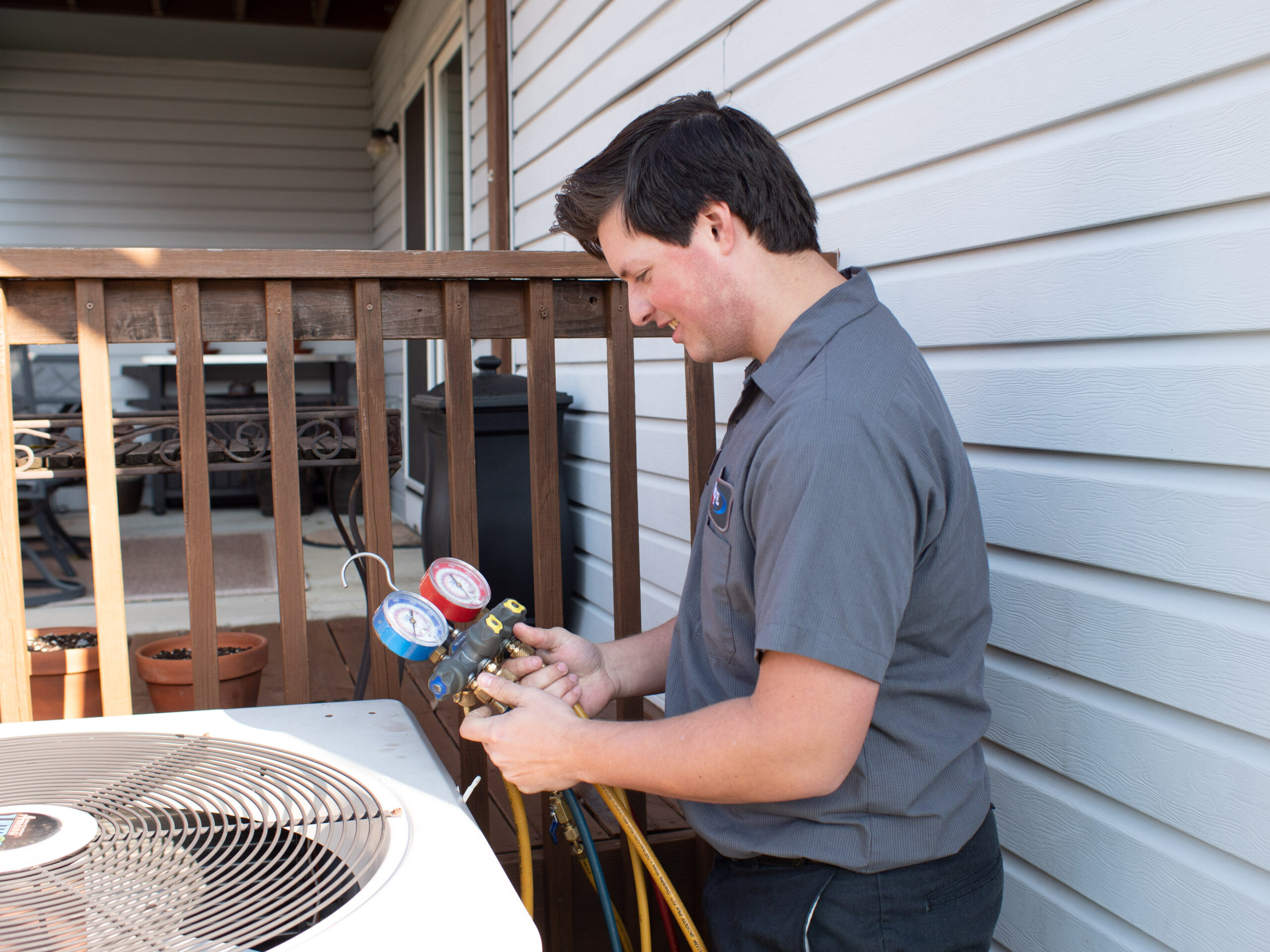
Refrigerant is a chemical compound that absorbs heat from inside your home and releases it outside, allowing your air conditioner to cool your space. Without the proper amount of refrigerant, your AC system won’t be able to maintain comfortable indoor temperatures.
A refrigerant leak can cause several air conditioning problems. Here are the most common signs to watch for:
If you notice any of these signs from your air conditioner, it’s time to call Grove Heating & Cooling for air conditioning repair to diagnose refrigerant issues and fix them right away.
Refrigerant leaks typically occur due to:
Over time, the copper coils that hold the refrigerant can develop tiny pinhole leaks due to corrosion.
Some air conditioners may have defective refrigerant coils or connections that lead to leaks over time.
If an AC unit is not installed correctly, it may develop leaks due to weak or faulty connections.
As an air conditioner ages, the connections and seals around the refrigerant lines can degrade, leading to leaks.
If you think your air conditioner has a refrigerant leak, you should:
Since refrigerant is a controlled substance, handling it requires EPA certification—meaning refrigerant leaks should always be addressed by a licensed HVAC professional.
While refrigerant leaks are one of the most common air conditioner issues, several other problems can lead to poor performance.
The evaporator coil is responsible for absorbing heat from your indoor air. Over time, dust and dirt can accumulate on the coil, reducing its ability to transfer heat effectively. Regular AC maintenance from Grove includes coil cleaning to reduce the likelihood of air conditioner problems caused by dirty coils.
An evaporator coil can freeze due to low refrigerant levels, dirty coils, or restricted airflow from clogged air filters or blocked vents. When this happens, turn off your AC and let the coil thaw. Check for airflow restrictions and replace the dirty air filter if needed. If freezing persists, call us for air conditioner repair.
Your AC removes moisture from the air, and the condensation collects in a drain pan before being expelled through the condensate drain line. If this line becomes clogged with dirt, algae, or debris, clear it using a wet or dry vacuum. If you cannot remove the blockage, contact us for AC repairs.
Air conditioners rely on various electrical components, including capacitors, relays, and wiring. If any of these parts fail, your AC may fail to start or randomly shut off, make clicking or buzzing noises, or blow warm air instead of cold air. Electrical issues should always be handled by a professional. Attempting DIY electrical repairs can be dangerous.
Your air conditioner has two fans: the blower motor and fan inside your home circulate cool air, and the condenser fan motor in the outdoor unit expels heat. If either fan fails or slows down, your AC won’t function properly. If you notice weak or no airflow from vents or strange noises from the AC unit, contact us to repair the issue.
Leaky air ducts can cause your AC to lose cool air before it reaches your rooms, making your system work harder. If you experience uneven cooling between rooms, higher energy bills, or dust buildup around vents, have our HVAC technicians inspect and seal leaks in the ductwork.
If your air conditioner is showing signs of a refrigerant leak, frozen coil, clogged condensate line, or electrical malfunction, don’t wait for the problem to get worse. At Grove Heating & Cooling, we offer expert AC repair services to diagnose and fix the issue quickly, ensuring your home stays cool and comfortable.
Schedule your AC service today—contact Grove Heating & Cooling now!
It’s a sweltering summer day in Columbia, MD, and your air conditioner has suddenly stopped working. Maybe it’s blowing warm air, making strange noises, or refusing to turn on at all. Before you panic and call for professional AC repair, take a step back—there’s a chance the problem is something simple you can fix yourself.
Many common air conditioning issues stem from minor problems like a tripped breaker, a clogged air filter, or a thermostat setting that’s just slightly off. By doing a little troubleshooting, you might be able to get your AC running again without the hassle or expense of a service call. Even if you do end up needing professional repair, checking a few key things ahead of time can save you time and help the technician diagnose the issue faster.
In this guide, we’ll walk you through some basic troubleshooting steps to try before calling Grove Heating & Cooling for AC repair in Columbia, MD. Let’s get your home cool and comfortable again!
What’s the first thing you should check when the AC stops working? Your thermostat! It might sound too simple, but thermostat settings are one of the most common culprits behind AC issues. Make sure it’s set to “cool” and not “heat” or “fan.” Then, check the temperature setting—sometimes, it may have been accidentally adjusted or reset.
If everything looks right but the AC still isn’t running, try changing the batteries (if your thermostat uses them) or turning it off and back on to reset it. Also, make sure the thermostat is not exposed to direct sunlight or heat sources, as this can cause it to misread the temperature in your home.
If your thermostat seems to be working fine but your AC still won’t kick on, it’s time to move on to the next troubleshooting steps. Go through the following checklist to rule out common issues:
If you’ve gone through all these steps and your AC still isn’t working, it’s time to call Grove Heating & Cooling for expert AC repair in Columbia, MD. Our experienced technicians can diagnose and fix the issue quickly to get your home cool and comfortable again!
Yes, if your AC is running but not cooling, it’s best to turn it off until you figure out what’s wrong. Letting it run when it’s struggling can put unnecessary strain on the system, potentially leading to bigger problems like a burned-out compressor or frozen coils.
If the issue is something simple—like a clogged air filter or a tripped breaker—you can fix it and turn the system back on. But if there’s a more serious problem, like low refrigerant or a mechanical failure, keeping the AC running could cause further damage. Shutting it off prevents unnecessary wear and tear while you troubleshoot or wait for a professional technician to diagnose the issue.
After attempting these troubleshooting steps, if your air conditioner still isn’t performing as it should, it’s time to call in the professionals. At Grove Heating & Cooling, our team of experienced technicians is ready to diagnose and repair your system promptly, so your home returns to a comfortable temperature as quickly as possible.
Don’t let a faulty AC disrupt your comfort—contact Grove Heating & Cooling for reliable air conditioning repair services in Columbia, MD.
When your air conditioner suddenly stops working, it’s easy to panic—especially on a hot summer day in Bowie, MD. The thought of sweltering in the heat while waiting for a repair technician can be stressful, but before you reach for the phone, take a deep breath. Some AC problems have simple solutions that you can troubleshoot on your own, saving you time and money, and reducing the hassle of an unnecessary service call.
From checking the thermostat settings to inspecting the air filter, a few quick steps may be all it takes to get your cooling system back up and running. Grove Heating & Cooling walks you through common AC troubleshooting tips to help you determine whether a quick fix can solve the issue—or if it’s time to call the professionals at Grove Heating & Cooling.

If your home isn’t staying cool, you may wonder what is the first thing to check when the AC stops working. Before calling our AC repair company in Bowie, MD, try these troubleshooting steps to see if you can resolve the issue on your own. Some problems have simple fixes that can restore your cooling system in minutes.
Your thermostat controls when and how your air conditioner runs. If your AC isn’t turning on or isn’t cooling properly, start here:
A clogged air filter can restrict airflow, making it seem like your AC isn’t working properly.
If your AC isn’t turning on at all, it could be a power issue.
Your outdoor AC unit (condenser) needs proper airflow to work efficiently.
Your AC unit may not be getting power due to a blown fuse in the disconnect box (usually located near the outdoor condenser unit).
If your AC is running but not cooling, the evaporator coils inside your indoor unit may be frozen.
Your AC produces condensation that drains away through a small pipe. If this line gets clogged, it can cause your system to shut down.
Blocked or closed vents can prevent cool air from circulating properly.
If you’ve gone through these troubleshooting steps and your AC still isn’t working, it’s time to call Grove Heating & Cooling for AC repair in Bowie, MD. Persistent issues like refrigerant leaks, compressor failures, or electrical malfunctions require expert repair. Our team is ready to diagnose and fix the problem quickly, so you can get back to enjoying a cool and comfortable home.
Yes, if your AC is running but not cooling after you’ve tried these troubleshooting steps, it’s best to turn it off to prevent further damage. When an air conditioner struggles to cool, it could be due to issues like a frozen evaporator coil, low refrigerant levels, or restricted airflow. Continuing to run the system in this condition can put unnecessary strain on the compressor, which is one of the most expensive components to replace. Turning off the AC unit prevents the system from overworking itself.
If your air conditioner still isn’t working after troubleshooting, don’t wait for the problem to get worse—contact Grove Heating & Cooling for expert AC repair in Bowie, MD. Our experienced technicians will quickly diagnose the issue and get your system back to keeping your home cool and comfortable.
Whether it’s a refrigerant leak, an electrical problem, or a failing component, we have the skills and tools to fix it right the first time. Don’t let the heat take over—schedule your AC repair with us today!
When your air conditioner starts acting strangely—blowing warm air, making odd noises, or refusing to turn on—it’s easy to assume the worst. But not every AC issue means you need professional repairs. Sometimes, the solution is as simple as adjusting the thermostat, cleaning a clogged filter, or checking a tripped circuit breaker.
At Grove Heating & Cooling, we know that a little troubleshooting can go a long way in getting your system back up and running without the hassle of a service call. We’ve put together this guide to help Arnold homeowners diagnose and fix common air conditioning problems.
If these quick fixes don’t do the trick, you’ll know it’s time to call in the experts. Let’s take a look at what you can do before reaching for the phone and calling us for AC repair in Arnold, MD.

The first thing to check when your AC stops working is the thermostat.
Before assuming there’s a major issue, make sure your thermostat is set to “cool” and that the temperature is set lower than the current room temperature. Sometimes, settings can be accidentally changed, or the batteries in a battery-operated thermostat may be dead.
If the thermostat seems fine, the next quick check is your circuit breaker. A tripped breaker can shut down your AC unit, especially if there was a recent power surge. If the breaker is off, reset it and see if your AC kicks back on.
If your thermostat is set correctly and your circuit breaker isn’t tripped, but your AC still won’t work, don’t worry—there are a few more things to check before calling for repairs. Follow these troubleshooting steps to see if you can get your system running again.
A dirty or clogged air filter can restrict airflow, causing your AC to work inefficiently or even shut down. Locate your air filter (usually in the return vent or inside the air handler), and if it’s covered in dust and debris, replace it with a clean one. For best performance, filters should be changed every 1–3 months.
Head outside and take a look at your condenser unit (the big metal box outside your home). If it’s covered in leaves, dirt, or other debris, it may not be able to properly release heat, which can cause your AC to stop cooling. Gently clear away any obstructions and hose down the coils to remove dirt buildup.
If your AC isn’t turning on, the problem could be a blown fuse in the disconnect box near the outdoor condenser unit. These fuses help protect your system from power surges and can wear out over time.
How do you tell if your AC fuses are blown? Follow these steps:
If you suspect a blown fuse but don’t have a multimeter, you can also replace both fuses with new ones of the same type and rating to see if that fixes the issue. However, if the new fuses blow again right away, this indicates a deeper electrical problem that requires professional repair.
If you’re unsure about checking or replacing the fuses yourself, Grove Heating & Cooling is here to help! Our technicians in Arnold can safely diagnose and fix any electrical issues with your AC system. Give us a call to schedule a service appointment.
If your AC has been running but isn’t blowing cold air, check for ice buildup on the indoor evaporator coil (located inside the air handler). A frozen coil can be caused by restricted airflow or a refrigerant issue. If you see ice, turn off the AC and let it thaw completely before turning it back on. If it freezes up again, you need to call us for AC repair so we can find and fix the underlying issue.
Blocked or closed air vents can create airflow problems, making it seem like your AC isn’t working properly. Walk through your home and ensure all supply and return vents are open and free of obstructions like furniture, rugs, or curtains.
Your air conditioner removes humidity from the air, and the condensation drains through a small pipe (the AC drain line). If this line becomes clogged with algae or debris, it can trigger a safety switch that shuts off your AC.
To check and clear the drain line, follow these steps:
After going through these troubleshooting steps, try turning your AC back on. If it starts working again, great! If not, there could be a deeper issue that requires a professional technician.
Troubleshooting your AC can often save you time and money by resolving simple issues like thermostat settings, clogged filters, or blocked drain lines. But if you’ve gone through these steps and your air conditioner still isn’t working, it’s time to call in the professionals.
Continuing to run a malfunctioning system can cause more damage, so the best thing to do is turn off your AC and contact Grove Heating & Cooling. Our expert technicians in Arnold are ready to diagnose and repair the issue, so your home stays cool and comfortable. Give us a call today for AC repair in Arnold, MD!
When your air conditioner stops working, it’s easy to assume the worst—but not every cooling issue requires professional repair. Sometimes, the problem is something simple that you can fix yourself in just a few minutes. Before you schedule a service call, there are a few troubleshooting steps you can take that might get your AC back up and running without the need for professional help.
Grove Heating & Cooling understands the frustration of dealing with a malfunctioning air conditioner, especially in the heat of an Annapolis summer. We’ve put together this quick guide to help you identify and potentially fix minor AC problems on your own. From checking your thermostat settings to inspecting your air filter, a little troubleshooting can go a long way in avoiding unnecessary AC repair costs.

The first thing to check when your AC stops working is the thermostat. It may sound simple, but many cooling issues stem from incorrect thermostat settings or a drained battery. Start by making sure the thermostat is set to “cool” and that the temperature is set lower than the current room temperature.
If your thermostat is battery-powered, replace the batteries to rule out a power issue. If your thermostat is wired into your home’s electrical system, a blank display could indicate a power failure or a tripped circuit breaker. If your thermostat is programmable or smart, ensure that no scheduling conflicts or eco-mode settings are preventing the system from turning on.
After making adjustments, wait a few minutes to see if the AC kicks back on. If everything appears to be set correctly but the system still isn’t responding, it’s time to move on to the next troubleshooting step.
If your thermostat is set correctly and your AC still isn’t working, don’t worry—there are a few more troubleshooting steps you can try before calling for professional air conditioning repair.
Your AC system requires a steady power supply, and a tripped breaker could be the reason it won’t turn on. Locate your home’s electrical panel and look for the breaker labeled “AC” or “HVAC.” If it’s in the middle or “off” position, switch it fully off and then back on to reset it. If the breaker trips again after resetting, leave it off and call a professional, as this could indicate a deeper electrical issue.
A clogged or dirty air filter can block airflow, causing the system to struggle or even shut down to prevent damage. Check your filter by removing it from the intake vent or air handler. If it looks dirty or clogged, replace it with a clean filter. Ideally, air filters should be changed every 1-3 months to keep your AC running efficiently.
Air conditioners remove humidity from the air, and the moisture drains through a small pipe called the condensate drain line. If this line gets clogged, your AC may shut down as a safety precaution. Locate the drain line near the indoor unit and check for blockages. You can try clearing it by using a wet/dry vacuum to suction out any debris or by pouring a small amount of vinegar or warm water into the line.
Head outside and take a look at your AC’s outdoor condenser unit. Make sure it’s not covered in dirt, leaves, or debris, as these can restrict airflow and cause overheating. Also, listen for any unusual noises—if the fan isn’t spinning or the unit is making strange sounds, there could be a mechanical issue. If the unit appears dirty, gently rinse it with a garden hose (avoid using high pressure) to remove dust and debris.
To check if your AC fuses are blown, turn off the system and locate the disconnect box near your outdoor unit and carefully open it to access the fuses. Using a multimeter, set it to the continuity or resistance setting and test each fuse—if there’s no reading or the circuit doesn’t complete, the fuse is blown and will need to be replaced.
Blocked or closed vents can cause uneven cooling and make it seem like your AC isn’t working properly. Walk through your home and check that all supply and return vents are fully open and not blocked by furniture, curtains, or rugs. Proper airflow is essential for keeping your AC running smoothly.
After completing these troubleshooting steps, give your AC a few minutes to see if it starts working again. If it still won’t turn on or isn’t cooling properly, it’s time to call Grove Heating & Cooling for expert AC repair in Annapolis, MD. Our team is here to help with fast, reliable service when you need it most!
If your AC is running but not cooling, it’s a good idea to turn it off to prevent potential damage to the system. Continuing to run an air conditioner that isn’t cooling properly can strain the compressor, which is one of the most expensive components to replace. Turn the system off at the thermostat and circuit breaker, then call us to diagnose and fix the problem before turning it back on.
If you’ve gone through these troubleshooting steps and your AC still isn’t working, don’t wait—call Grove Heating & Cooling for expert AC repair in Annapolis. Our experienced technicians are ready to diagnose the problem and get your air conditioner back up and running quickly. Don’t suffer through the heat—contact us today for fast, reliable service you can trust!


2142 Priest Bridge Ct. Suite 6, Crofton, MD 21114
